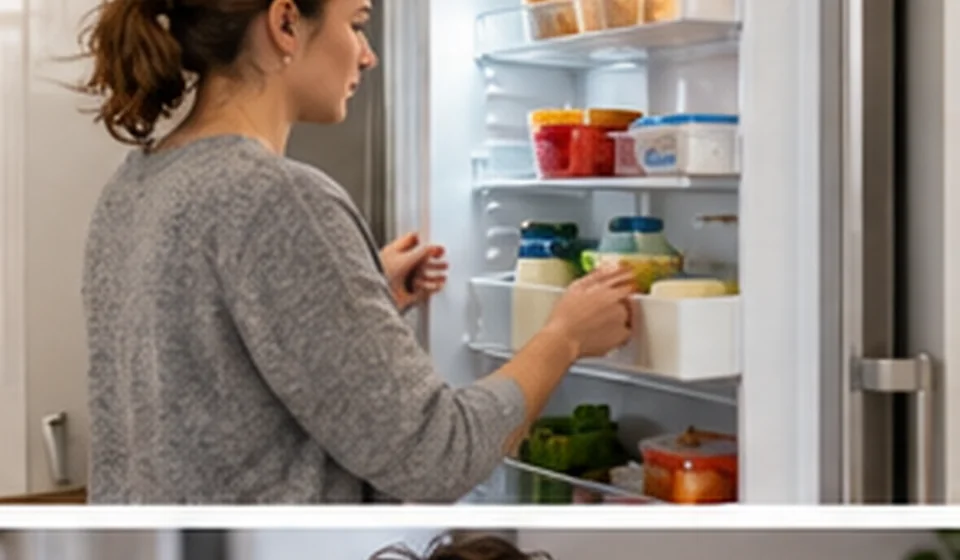
A fridge is the appliance a household notices most quickly when it fails. Within a day, milk, meat and baby food spoil, insulin and some other medicines may need cold storage, and shopping cheaply in bulk becomes impossible. For families on Universal Credit, pensioners and anyone on a tight budget, finding the money for a replacement at short notice can feel out of reach. In the United Kingdom, there are several ways to get a fridge or fridge freezer free or at low cost before you consider any form of credit.
This page deals specifically with fridges and fridge freezers. For cookers, beds and other items, see our page on help with essential household appliances, and for laundry, the guide to replacing a washing machine.
Before you replace it: check repair and responsibility
- Is it under warranty or guarantee? Check the purchase receipt and any extended warranty. Under consumer law, goods must last a reasonable time, so a fairly new fridge that fails may be the retailer's responsibility.
- Does your landlord own it? If the fridge came with a rented property and is listed in the inventory, the landlord is normally responsible for repairing or replacing it. Report the fault in writing.
- Is it a simple fault? A blocked drain hole, frosted-up freezer or failed door seal can sometimes be fixed cheaply. Repair cafés and community repair groups may help for free.
- Is it a recalled model? Some appliances are recalled for safety reasons. Check the model number with the manufacturer or an official recall register.
Grants and local schemes that provide fridges
Council crisis and welfare schemes
Local welfare provision often supplies white goods directly rather than cash. In England, ask your council about its local welfare or household support scheme. In Scotland, the Scottish Welfare Fund offers Community Care Grants that can cover essential items for people setting up or staying in their home. In Wales, the Discretionary Assistance Fund can provide individual assistance payments, often as goods. In Northern Ireland, Discretionary Support can help with essential items. Each scheme has its own rules and budget, so explain clearly why you need the fridge now: children, a health condition, medicines that must stay cold, or food going to waste.
Charities and benevolent funds
- Family Fund provides grants to families raising a disabled or seriously ill child, which can include fridge freezers.
- Turn2us has a grant search tool listing charities by situation, occupation, health condition and area.
- Benevolent funds linked to a former employer, trade, union or the armed forces often help with essential appliances.
- Social workers, health visitors, housing officers and Citizens Advice can make referrals to charities that only accept applications through a professional.
Second-hand and reuse options
A good used fridge can cost a fraction of a new one. Look at furniture reuse charities (many are part of the Reuse Network), charity shops that sell electrical goods tested for safety, and free-giving groups such as Freecycle or local community groups. When buying second-hand:
- ask whether the appliance has been safety-tested, and look for a test label;
- check the door seal and inside for damage or smells;
- look at the energy rating, as an old, inefficient fridge can add noticeably to an electricity bill that runs all year;
- let it stand upright for several hours after transport before switching it on;
- check it fits your space and can be delivered; reuse charities sometimes deliver for a small fee.
Choosing the right fridge for a small budget
A fridge runs every hour of every day, so the cheapest to buy is not always the cheapest to own. A smaller under-counter fridge with a freezer compartment may be enough for one or two people, while families usually save money with a fridge freezer that allows batch cooking and frozen food. Compare the annual energy consumption on the label. If you are on a prepayment meter, a more efficient model makes each top-up last longer. Our page on cutting electricity costs has more ideas.
While you wait
- Buy smaller amounts of fresh food, and favour tins, dried and long-life products.
- Ask a neighbour, relative or community centre to store essential items, especially medicines.
- Ask your pharmacist how to store medicines that normally need refrigeration.
- Contact a food bank or community pantry if food has spoiled and you cannot replace it; our guide to emergency food help explains how referrals work.
If you have to pay over time
Only consider credit once free and second-hand options have failed. Options to compare:
- Universal Credit Budgeting Advance: interest-free, repaid from future payments, for people who meet the conditions.
- Credit union loan: small loans at capped rates; some credit unions run partnerships to supply appliances.
- Retailer 0% finance: only if you can meet every payment; missing one can bring fees or interest.
Be very careful with rent-to-own shops and catalogue credit. Even with price caps on rent-to-own, the total paid can be far higher than the price of the fridge, often with insurance added. Compare the APR and total amount repayable, and check that any firm is authorised on the FCA register. Our guide to nonprofit and community loans explains safer routes.
Scam warning
Fake listings for cheap appliances on social media and marketplaces often ask for a deposit or full payment before collection, then disappear. Pay only when you see the item, and never pay an upfront fee for a loan.
Checklist
- Check guarantee, landlord responsibility and recall status.
- Try a repair if the fault is simple.
- Apply to your council's welfare scheme or devolved fund.
- Search charities and benevolent funds, ideally with a referral.
- Look at reuse charities and free-giving groups.
- Compare energy ratings before you choose.
- Use credit last, and only from authorised, low-cost lenders.
Loan offers and financial help to compare
- British Heart Foundation Furniture & Electrical — Heart research charity whose furniture and electrical shops across the UK sell donated household items at affordable prices to fund its work.
- Family Fund — Charity offering grants to low-income families with disabled or seriously ill children for household essentials such as white goods, beds and computers.
- Good Things Foundation National Databank — Digital inclusion charity whose National Databank provides free mobile data, texts and calls through local community partners to people who cannot afford connectivity.
- Hubbub Community Calling — Environmental charity programme that collects unwanted smartphones, refurbishes them and gives them to digitally excluded people through local community organisations.
Indicative, non-exhaustive list of real institutions, with no commercial link to this site. Check authorisation, APR and terms before applying; never pay fees upfront.